Earth’s four and a half billion year history is a number that’s generally too big to understand. But if you can actually frame Earth’s geological history (also known as deep time) in a way that makes this tangible, the result can be incredibly powerful and grounding. I wanted to build something that captured this feeling.
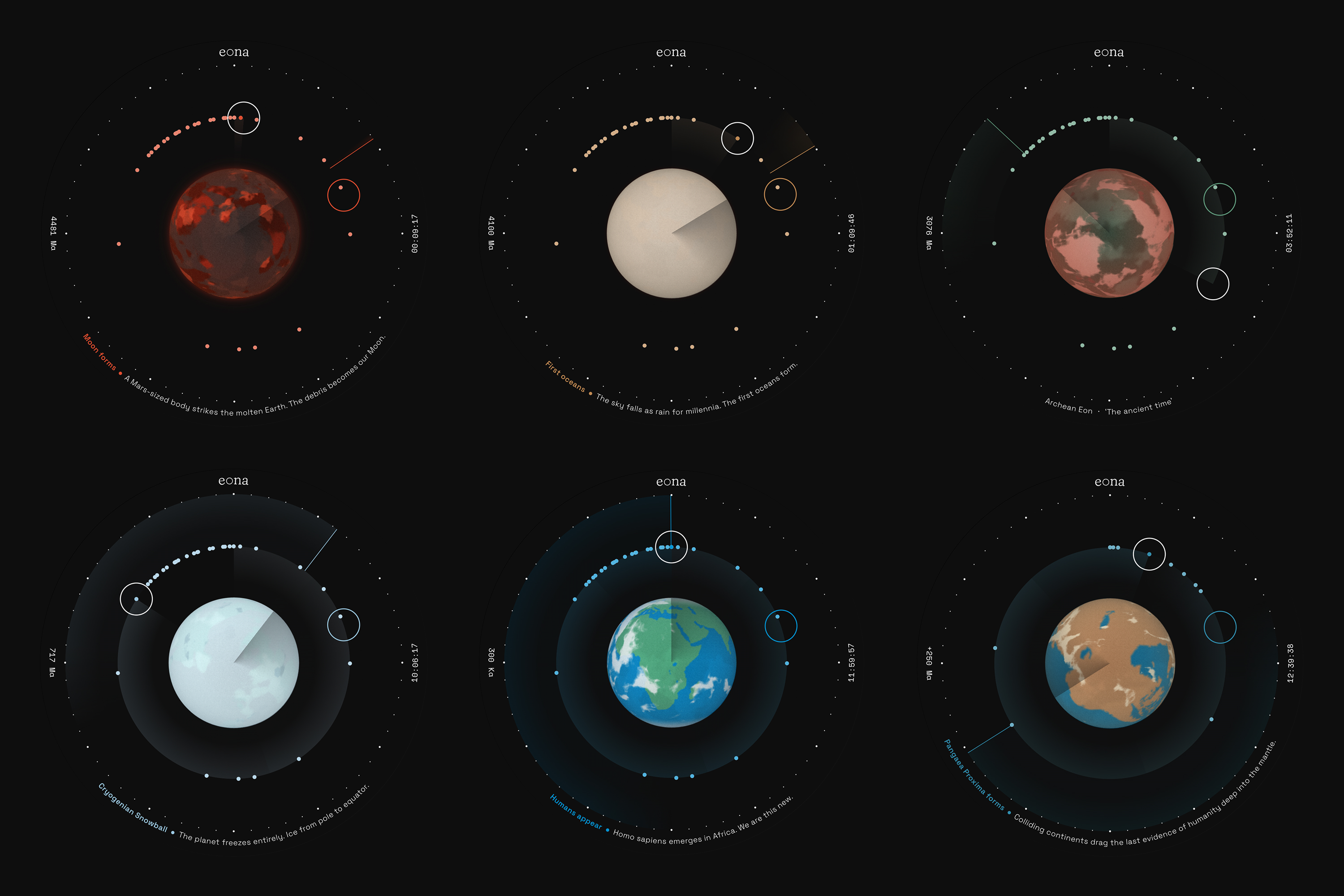
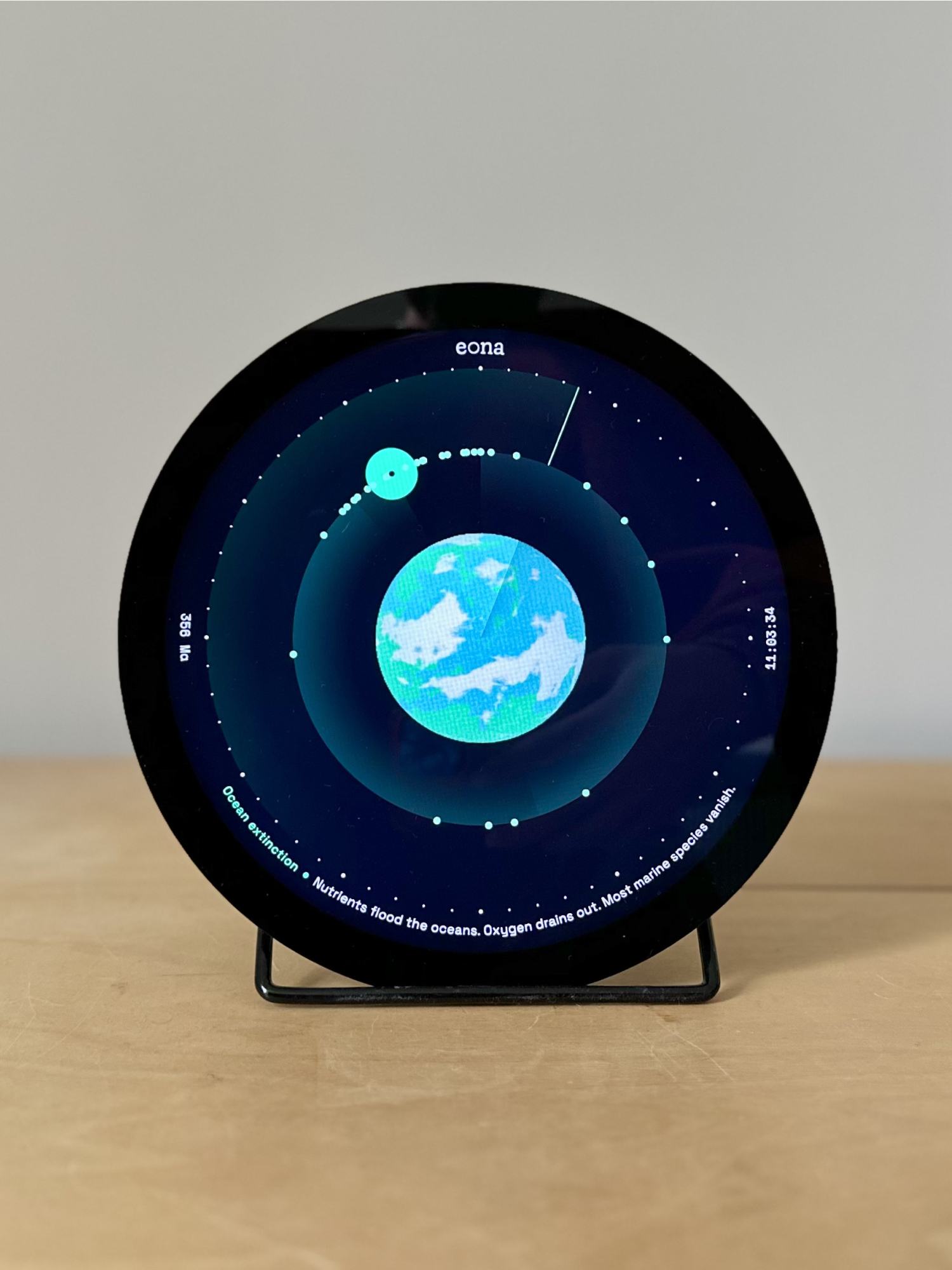
eona.earth maps Earth’s full lifespan onto a single day, running on your local time. Midnight marks the moment the planet formed. The morning covers everything that has ever happened: the moon appears in the first few minutes, the Cambrian explosion arrives at 10:34, the dinosaurs are gone by 11:49 and humans turn up three seconds before noon. Noon is now.
Mammal species typically last around a million years at the best of times, about ten seconds at this scale. But we’re also currently experiencing Earth’s sixth mass extinction, so humanity’s remaining time on the clock should be over within a second.
In the afternoon, the clock carries on into the deep future. The continents fuse into a new supercontinent, photosynthesis ends at 13:35, the last life disappears just before 16:00, the water is gone by early evening and at midnight the expanding Sun swallows what’s left. The story ends where it began. This follows published projections from Christopher Scotese’s Pangea Proxima model for the continents and solar evolution studies.
Whatever time you’re reading this, you’re looking at a specific moment in Earth’s story. You can also drag the handle and scrub through the whole thing yourself, watching the continents drift and the planet change as you go.
Illustrating deep time
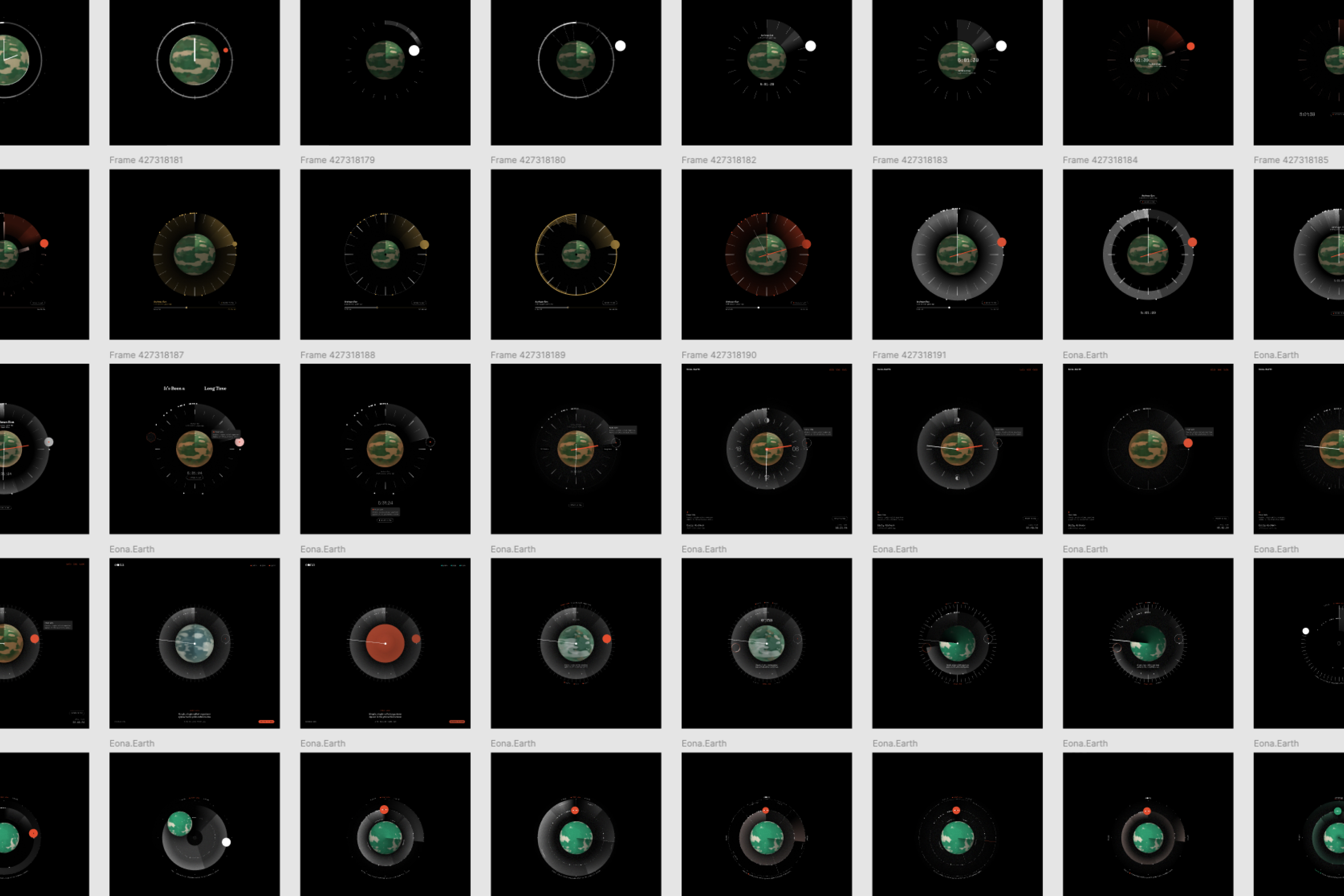
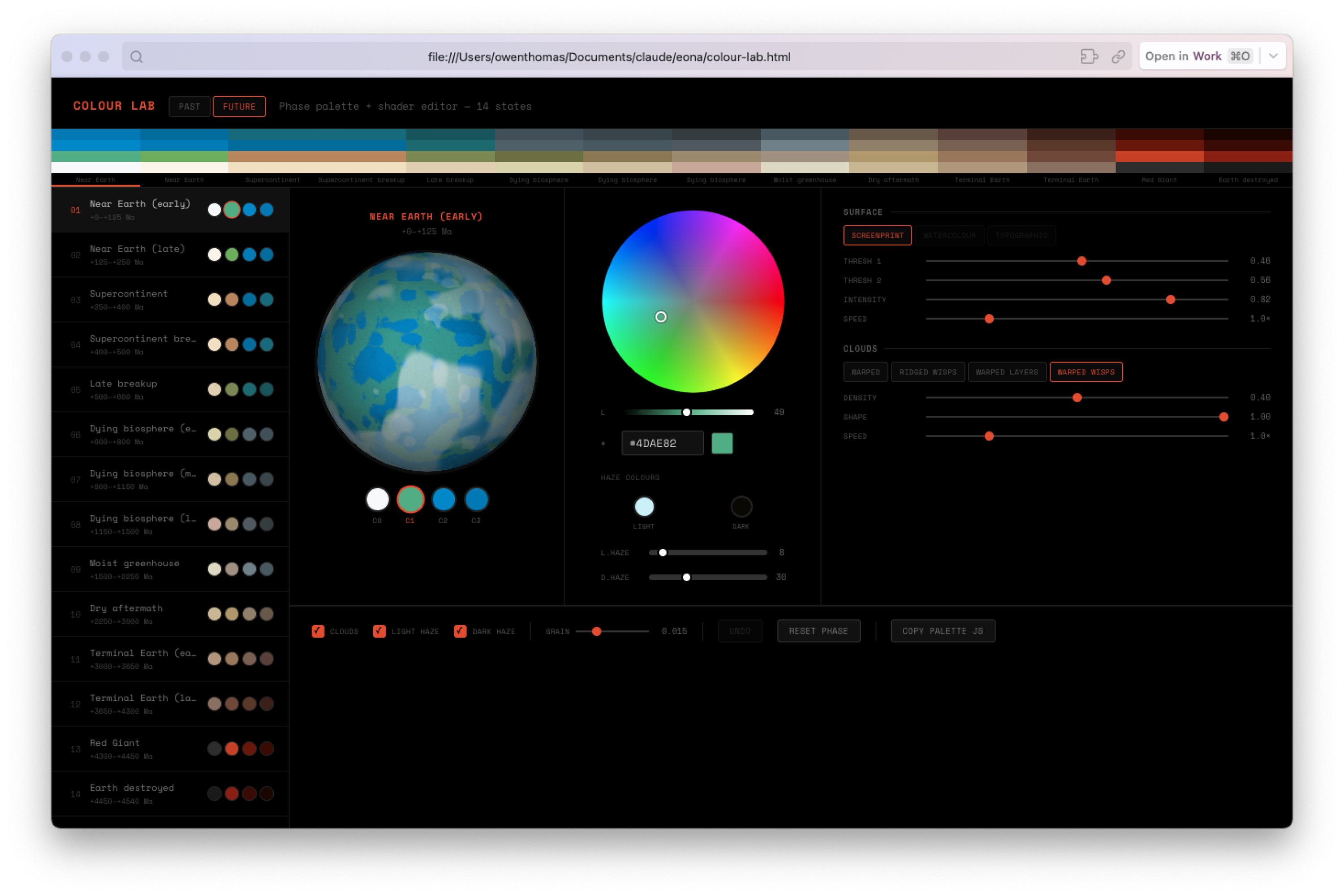
The Earth passes through over two dozen visual phases, from the molten Hadean through two snowball Earths to the modern planet and through a future supercontinent and a dying biosphere to a scorched terminal Earth and the red giant that ends it.
I fed an initial palette to Gemini to establish a colour system that flexed across the timeline, each phase approximating what was plausibly happening at that moment while remaining illustrative. The continents are real where the data exists: paleogeographic maps encoded as signed-distance fields, blended in the shader so landmasses drift and merge as you scrub (best observed with spinning disabled, done with a simple click/tap on the globe). One atlas covers the last 635 million years, a second projects the drift forward until the continents collide into Pangaea Proxima about 250 million years from now.
Building it with Claude Code
I know HTML and CSS and can find my way around an interface, but the rest of this was new territory for me. I built the clock end-to-end with Claude Code: a single HTML file, vanilla JS, Three.js for WebGL and a custom fragment shader doing the planet, procedural clouds and atmospheric haze. The entire thing ships as one file that a small build script turns into separate web and Raspberry Pi versions.
I initially attempted to one-shot the build with Opus. This over-engineered the output: at one point the fragment shader was running four noise passes per pixel, every frame, at 60fps. From there I iterated on the design in Figma and implemented incrementally with Sonnet, reaching for Opus when things got complicated or stuck. When Fable launched I used that for code reviews and refactoring.
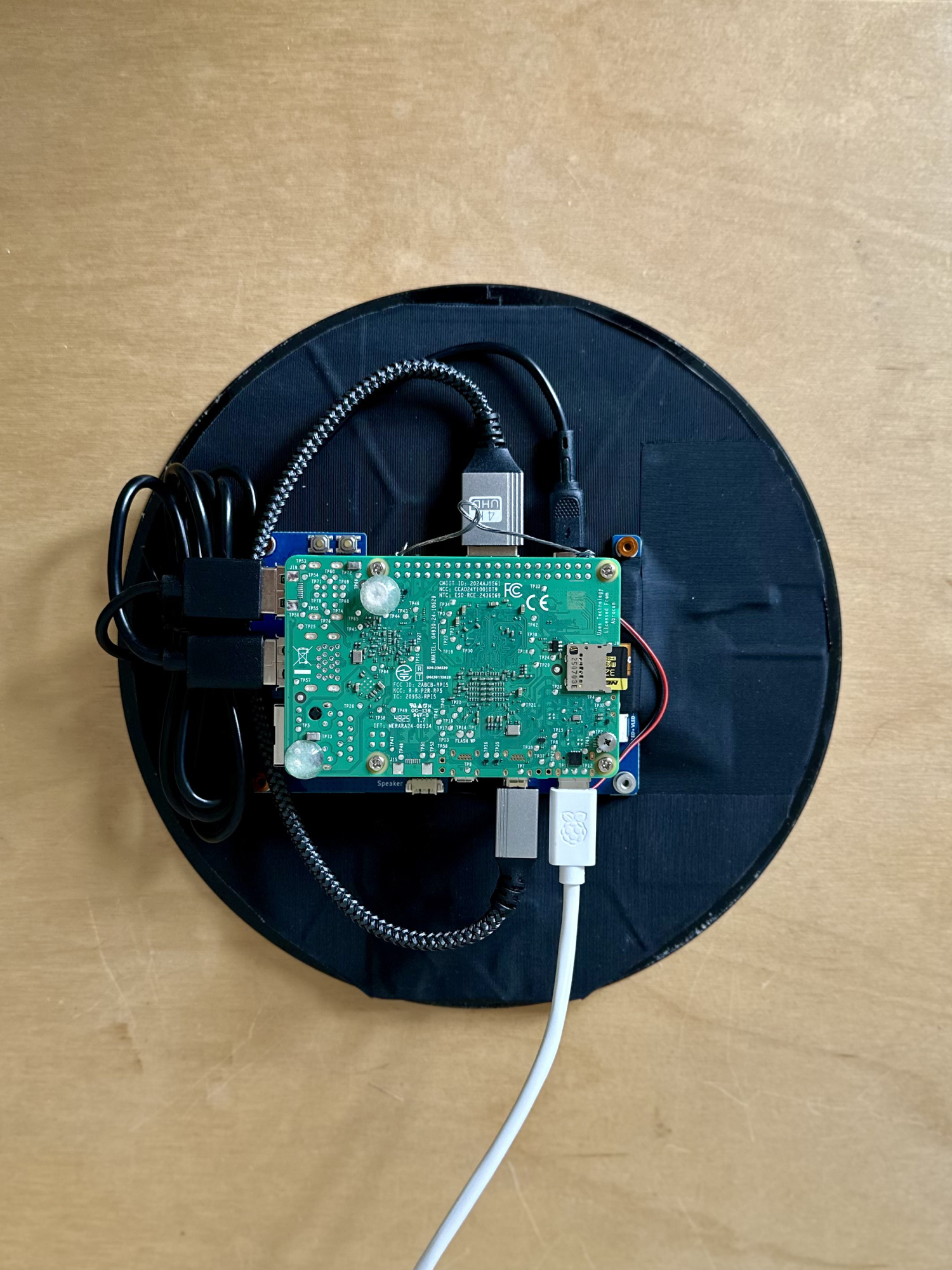
Eona also runs as a physical object: a Raspberry Pi 5 driving an eight-inch round display. Getting it onto hardware meant collapsing the cloud shader to sit just inside the chip’s instruction budget, and it now runs continuously with minimal energy use and no risk of overheating. A desktop version is next, built from the same source file.
Keeping perspective
Working with AI has taught me a lot about managing context and complexity, especially on this project. Claude will happily make things more complicated than they need to be. This was an exercise in restraint: taking a complex mental model and making it intuitive and user-friendly, distilling a bunch of different data points into a single visual artefact. The process has felt like a validation of my expertise: using my judgement to build something that works well, but also looks good.
Deep time helps me keep perspective. From a geological point of view we’re insignificant, which is a useful thing to remember when life gets heavy. There is no point in worrying beyond what we can control. I’d wanted to build something like this for years. AI finally made it possible.