When I joined Ecosia, the company had a radical founder, a strong mission, a global tree-planting operation, a loyal user base and a profitable business model. However, the culture was inherently conservative because any investment in product felt like it was taking money from tree planting. Teams were building in isolation, we lacked a shared view of where the product was headed and struggled to offer much to our users beyond tree counters.
Ecosians had a lot of competing views on what the brand meant to them, but there was little understanding of our audience’s motives or how we might address them. I ran multiple initiatives over three years to help Ecosia move forward, starting with a workshop that drew leadership's divergent views into a proposition our core users recognised.
This design-centred approach to problem-solving and consensus-building would become fundamental to everything that followed: from building the design team’s foundations, to a product vision that triggered significant retention improvements, to a framework for AI that shaped a company-wide product pivot.
Giving the design team a purpose
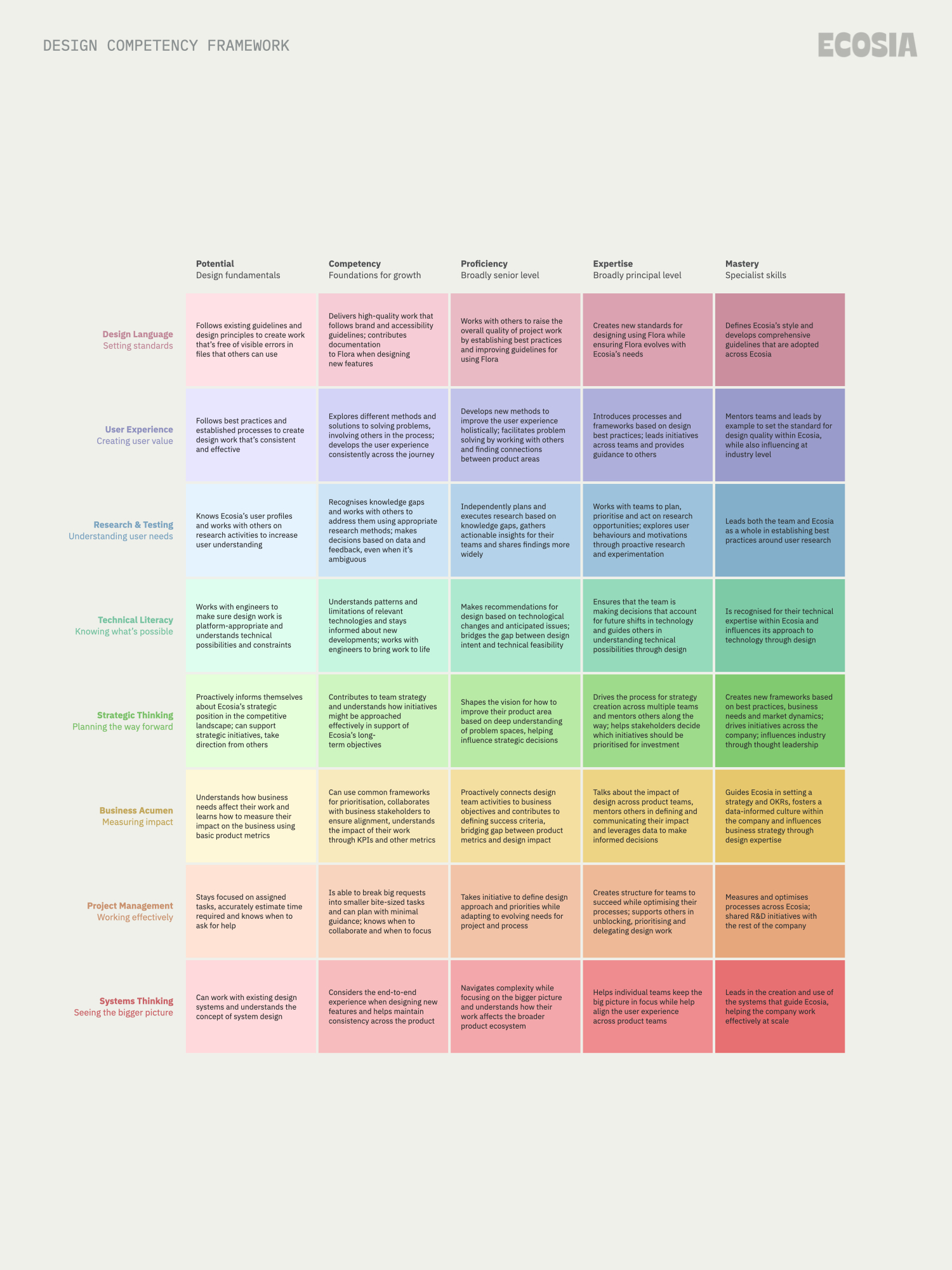
With Ecosia being heavily focused on business metrics for everything from OKR planning to performance reviews, the design team was struggling to create space for our own success when planning roadmaps or developing our careers. I introduced a series of leadership initiatives, starting with a design strategy and programme to help us become more intentional in OKR planning, and new frameworks for designers to track their skills development beyond the usual performance criteria used in bi-annual reviews.
The design team grew from five to ten during my time at Ecosia, with no attrition. I think that's partly structural: designers who have their own benchmarks for what good looks like produce more consistently and stay longer than those who measure themselves entirely against business metrics.
Showing Ecosians where we’re going
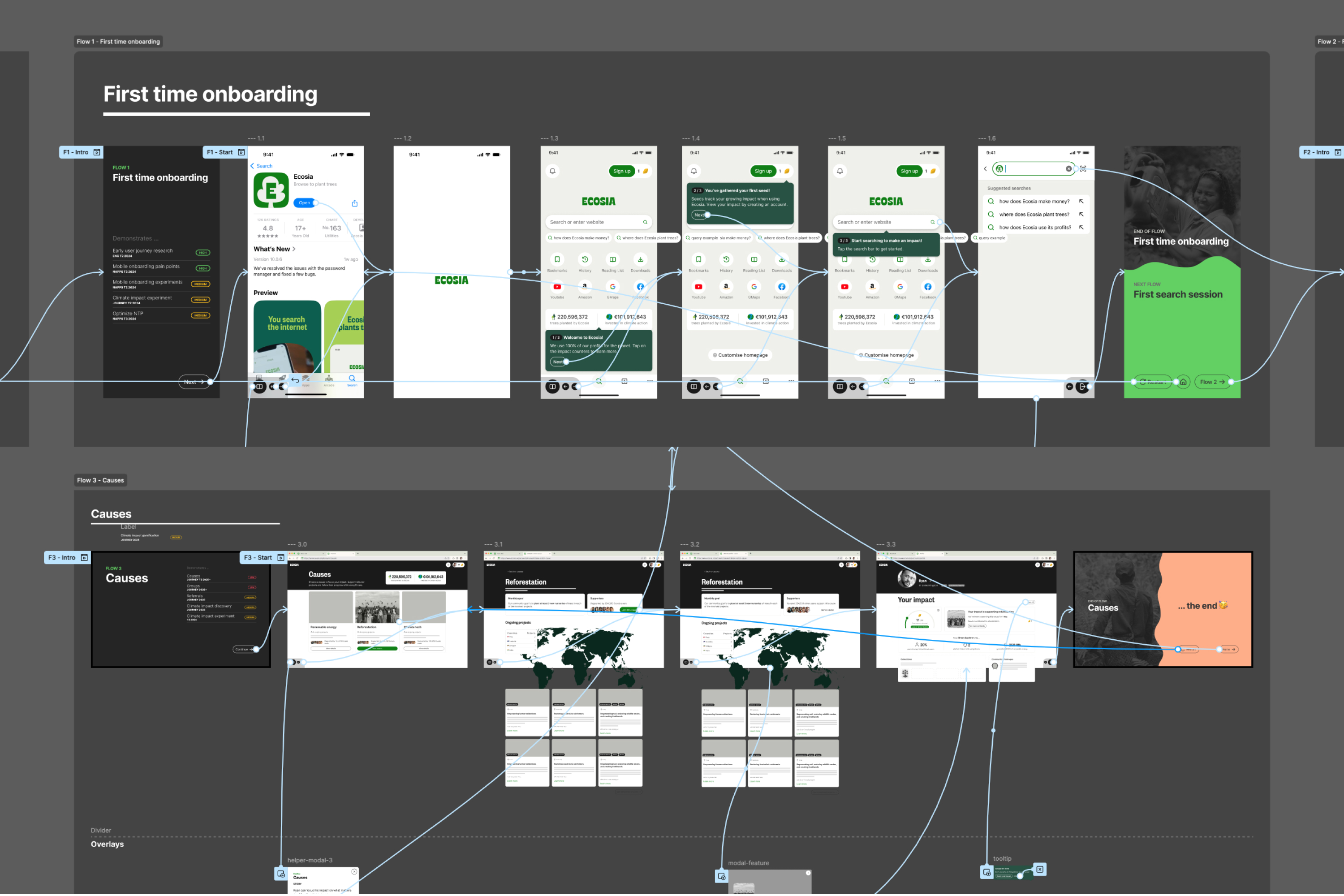
To address the lack of transparency across product roadmaps, I led a small team to deliver Ecosia’s product vision. We gathered data, insights and priorities from across the product organisation and distilled them into a vision of a near-future Ecosia. It took the form of user stories and interactive prototypes, each one highlighting a team’s initiatives and estimated horizons. We built it using Flora, Ecosia’s design system, to consolidate how we developed high-level concept work and turn the output into a repeatable process. The vision was presented to the entire company and became a shared reference point for decisions that had previously been made in isolation. It also became the catalyst for several key product initiatives, including user accounts.
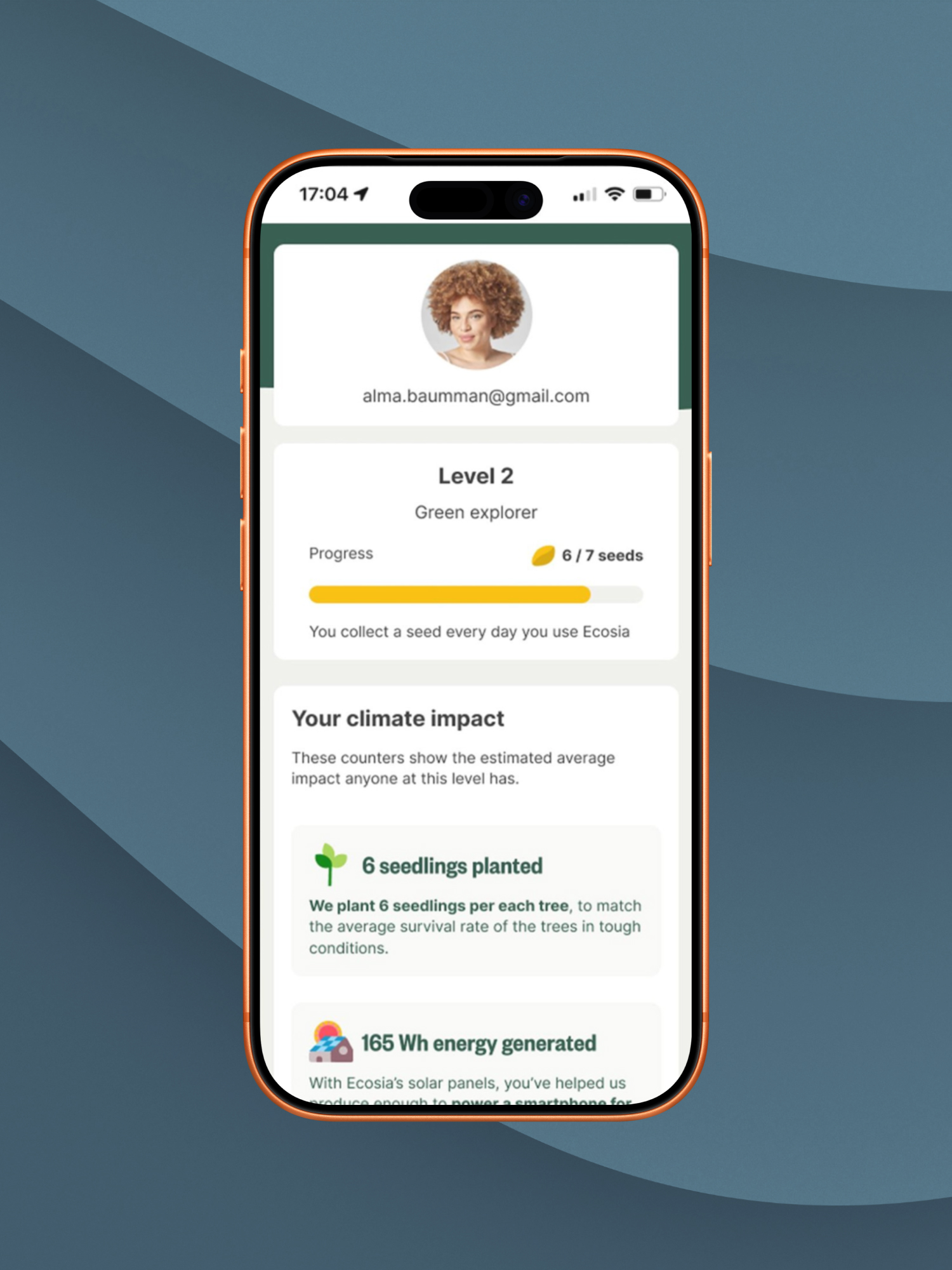
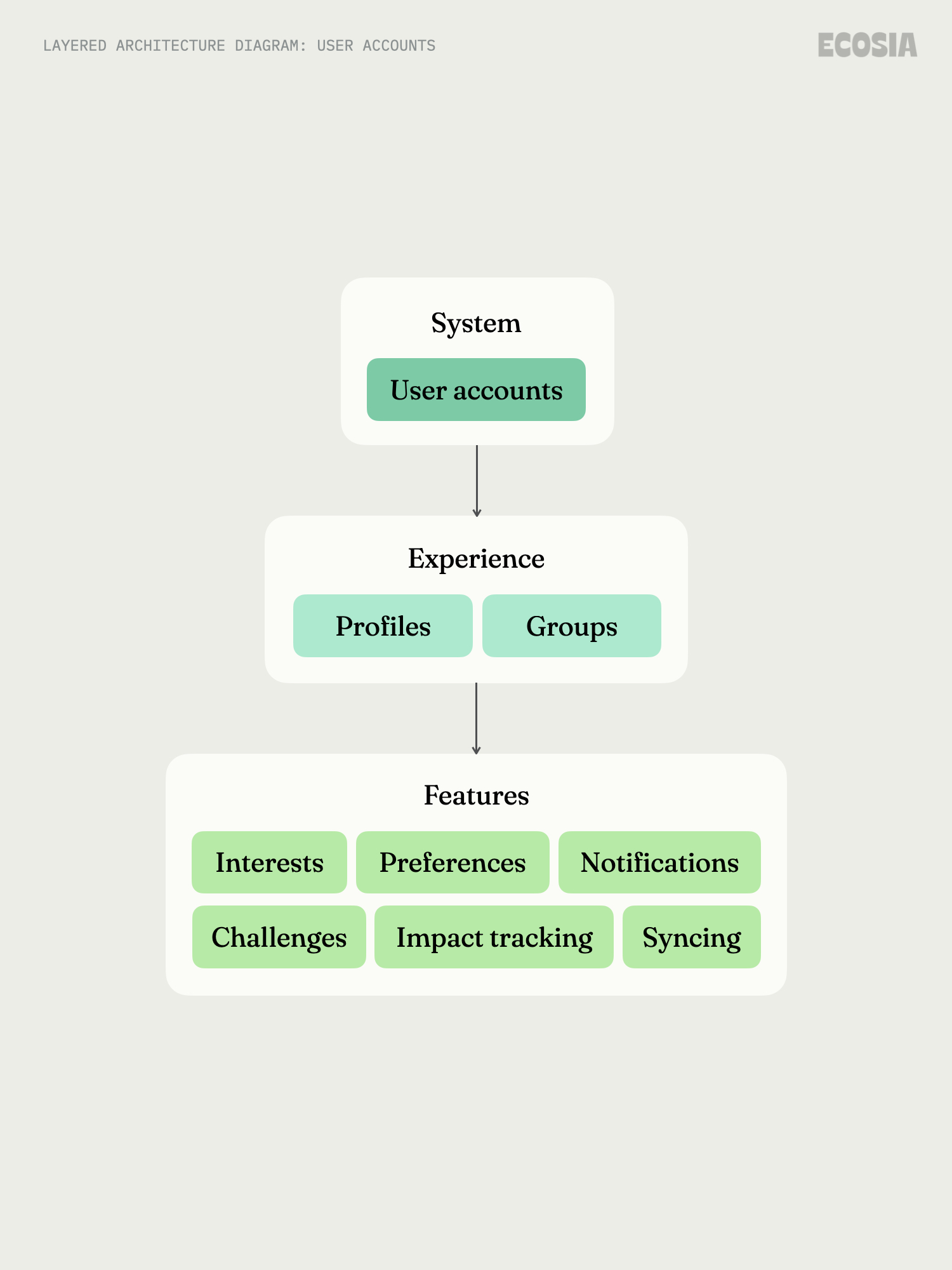
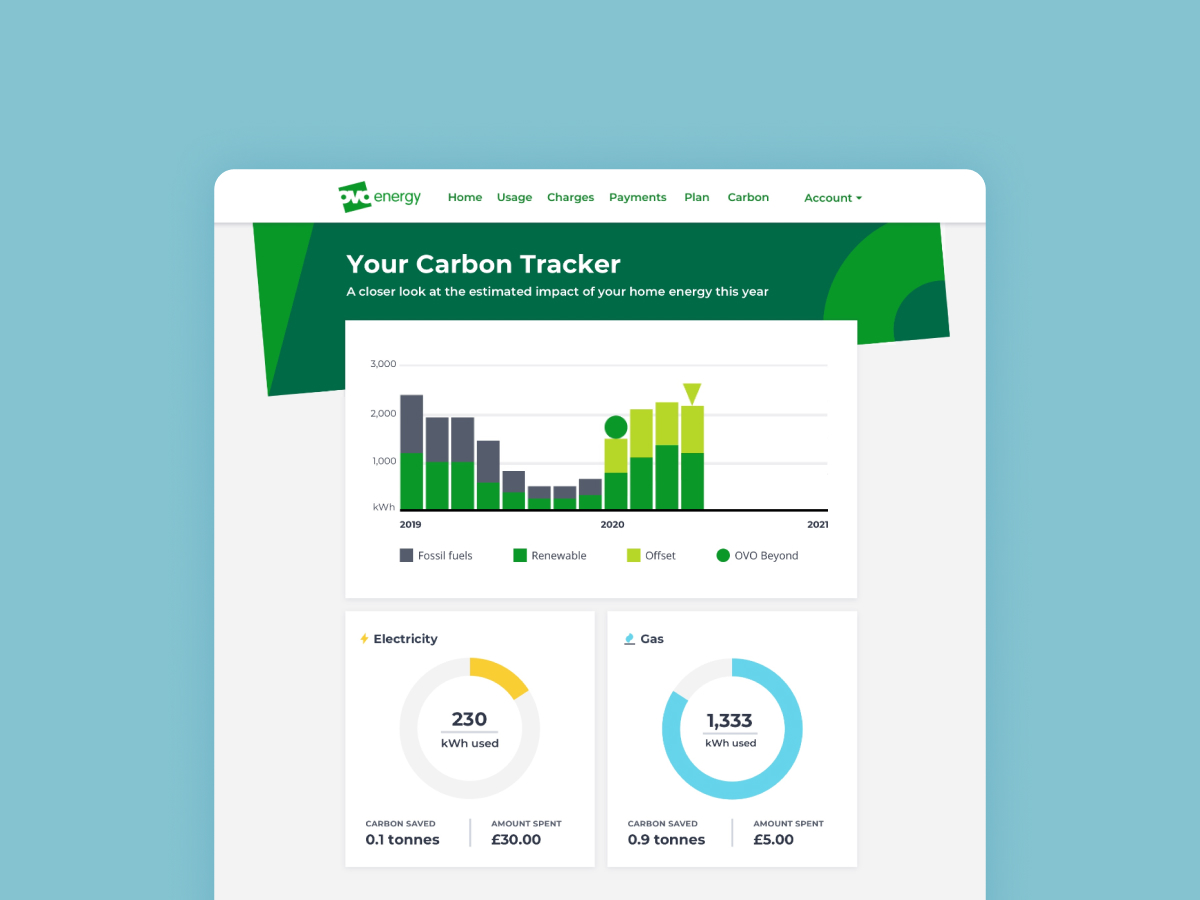
User accounts had the potential to become the foundation for personalised features, engagement loops and measurable retention improvements, but required incentive for users to sign in. The vision work helped the accounts team identify value propositions that were eventually developed into the live account experience: impact tracking, gamification through seeds, levels and collectibles. The new account experience, which traces directly to the priorities highlighted by the vision work, is the primary driver of the 230% increase in new user retention, 85% increase in signed-in searches and 10% decrease in user churn.
Navigating the biggest shift in search since Google
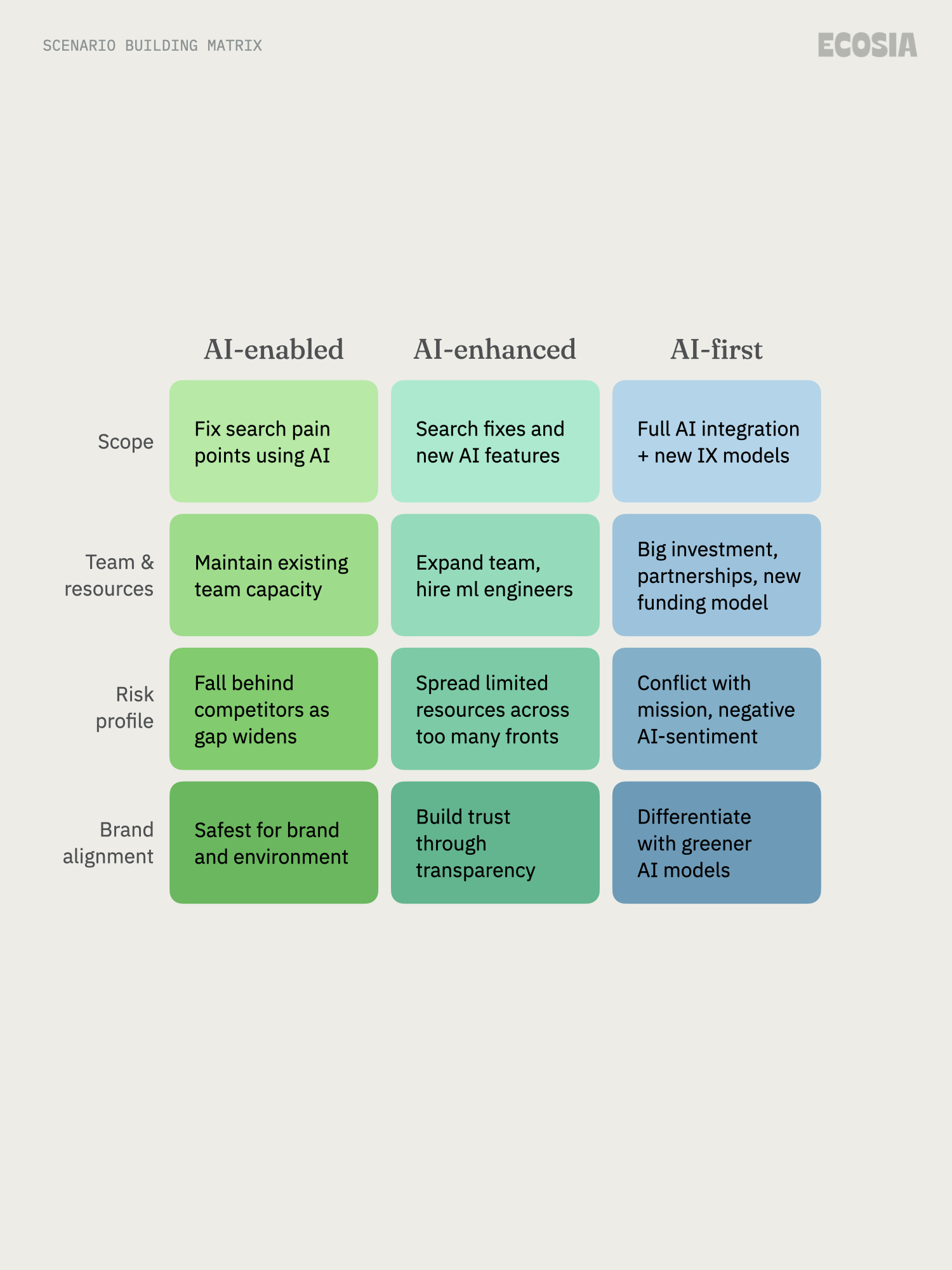
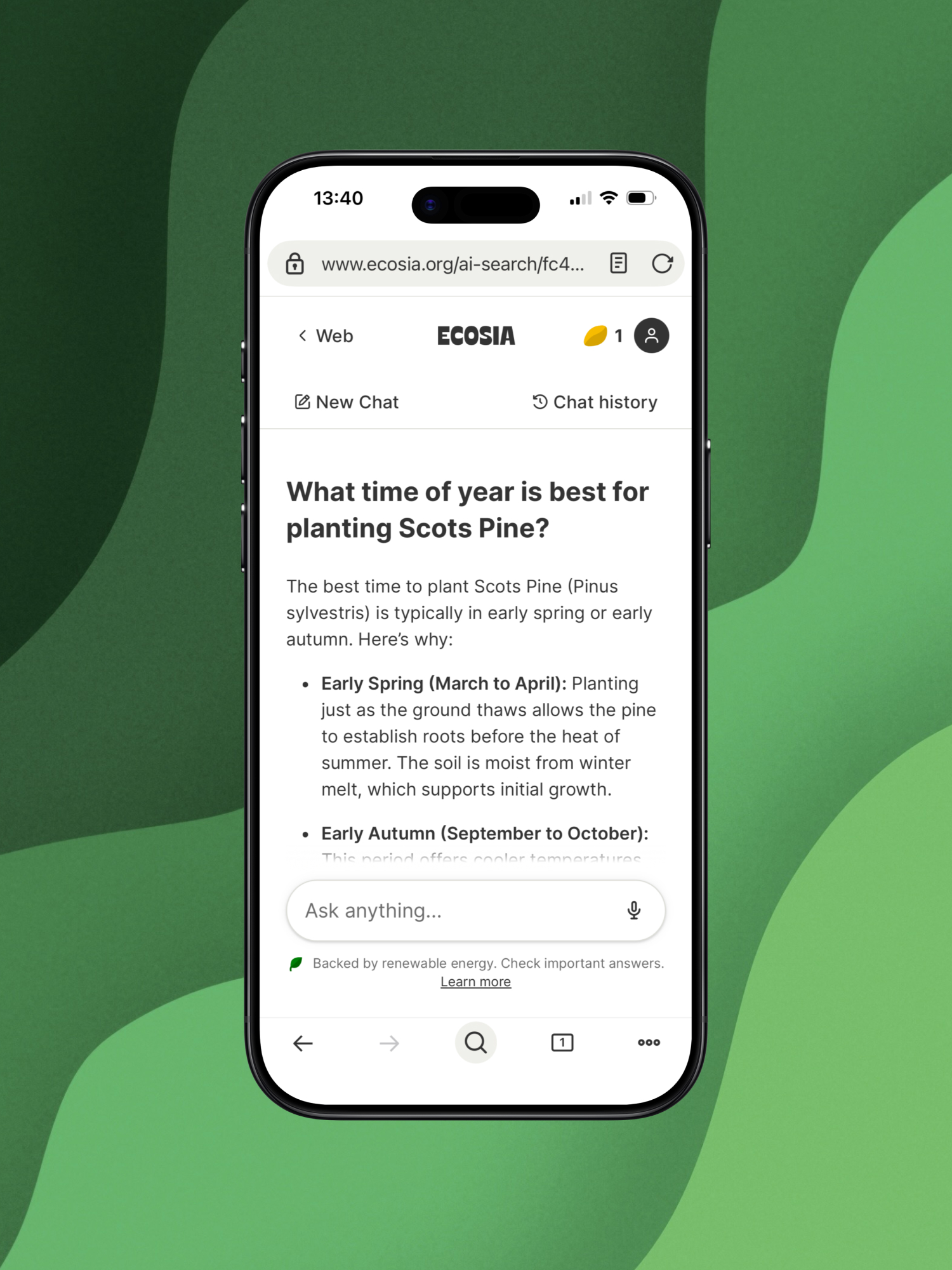
By mid-2024, generative AI was reshaping search and Ecosia needed a clear position. I led the analysis phase, which included mapping the competitive landscape, synthesising six months of usage data and user attitudes, and identifying Ecosia’s four biggest pain points that predated AI but were being amplified by it. This fed into a strategy framework with three integration scenarios, each one with real resource implications. Leadership initially chose the conservative path, but returned to the framework and pivoted to full integration as the landscape continued to shift. Ecosia’s AI search experience now runs on smaller, greener models — a decision rooted in the brand alignment analysis from that original framework.
The thread through it all is the same: entering situations where the problem isn’t clearly defined, finding the right process to make it legible and leaving the organisation better equipped to navigate the next one.